
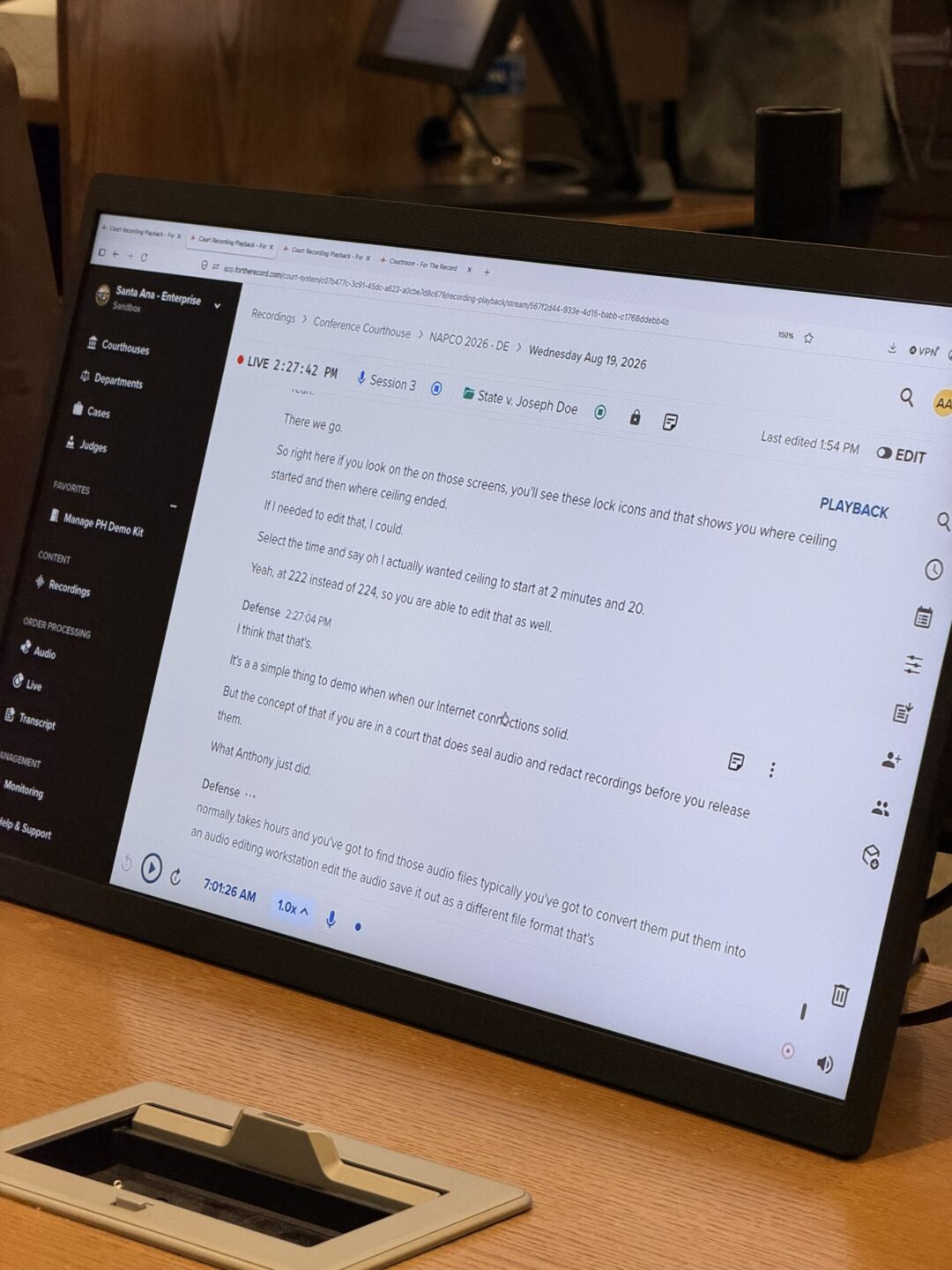


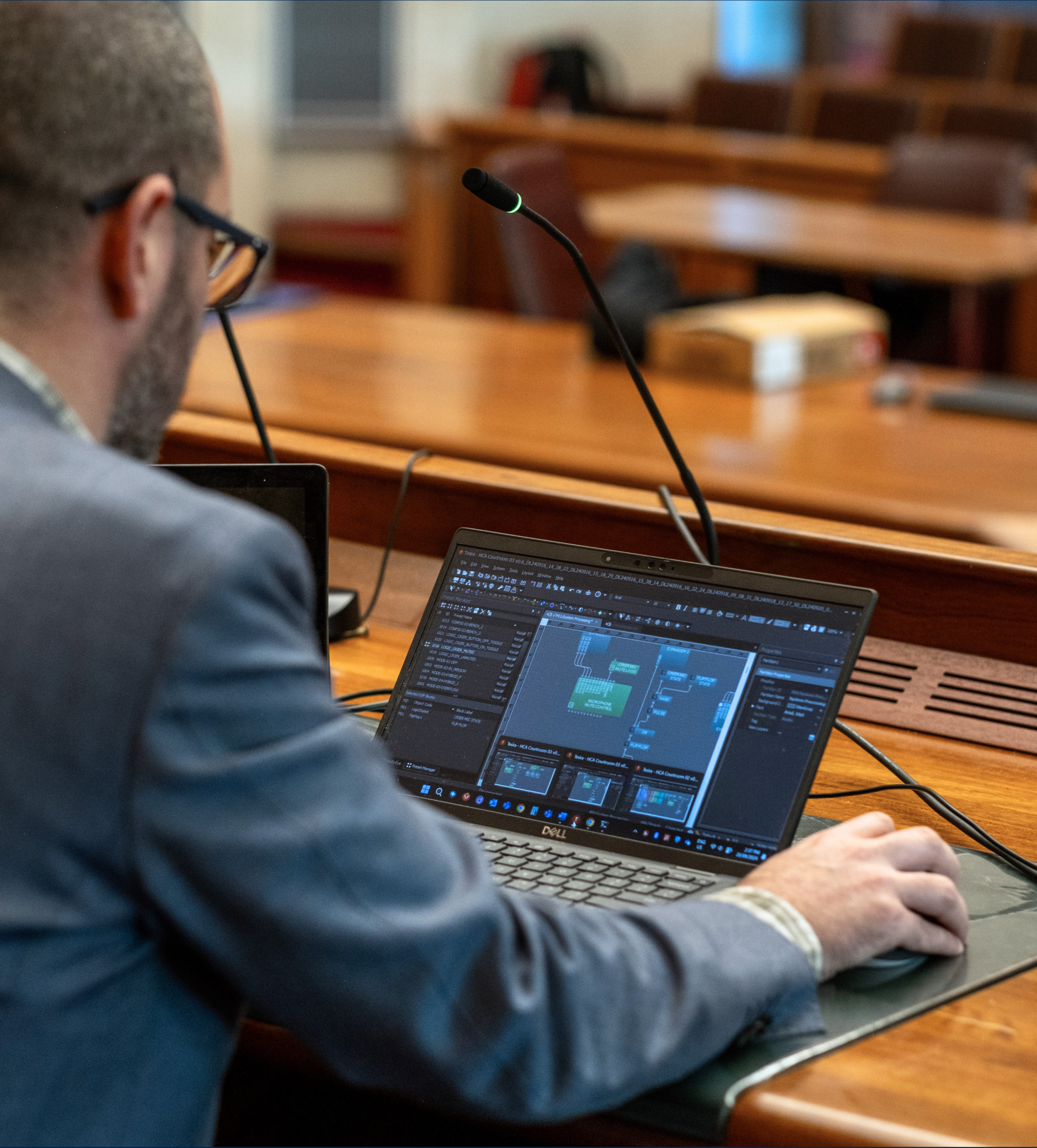
During demonstrations, the most common question is not “Can your platform do this?” Instead, it’s “How would this work in our court?”
It’s an important distinction because no two courts operate exactly the same way.
Whether it’s managing sealed portions of a juvenile hearing, handling different workflows across criminal and civil cases, or deciding how annotations should be used, every court has its own procedures, policies, and priorities. This is why implementation shouldn’t begin with technology—it should begin with understanding your court and how it operates.
As part of every FTR Justice Cloud deployment, we conduct a thorough business review. We sit down with each court to understand how they plan to use the platform, the challenges they need to solve, and their desired outcomes. We also take the time to understand their existing workflows and ask an important question: should we adapt the technology to fit these processes, or is there an opportunity to improve the processes altogether?
That review isn’t simply about replicating existing processes within new technology. It’s an opportunity to evaluate how work is done today, identify ways to improve efficiency, reduce manual effort, and streamline day-to-day operations while ensuring the platform supports the court’s operational, governance, and compliance requirements.
From there, we design workflows that best support each court’s needs. Often there are multiple ways to accomplish the same goal, and together we determine the approach that delivers the right balance of efficiency, consistency, flexibility, and risk management.
Technology should improve processes, not just replicate them
Every court is unique and implementation should reflect that
Technology is only one part of modernization. The real value comes from combining proven technology with thoughtful implementation that respects the way courts operate while helping them work more effectively.
Successful modernization isn’t about asking courts to change everything they do. It’s about understanding their unique processes, identifying opportunities for improvement, and implementing technology in a way that delivers lasting operational benefits.