25 Mar
2026
Legalweek 2026 in Review: Why Verification Is the True Competitive Advantage in Legal AI

Legalweek 2026 made one thing clear: AI is no longer experimental—it’s operational. Across sessions, demonstrations, and conversations, the focus has shifted from exploring what AI might do to determining how it fits into the day-to-day reality of legal workflows.
What stood out across conversations wasn’t excitement alone, but urgency. Legal professionals are actively working to embed AI into their day-to-day workflows, from deposition review to case preparation. But alongside that momentum, there’s a growing recognition of a hard truth: AI is only as reliable as the data it’s built on.
During Legalweek, there was a noticeable shift in how the industry is redefining trust. Not long ago, the conversation centered on whether AI outputs were interesting or useful; today, the focus is on proving that they are reliable—consistently, defensibly, and at scale. In legal workflows, speed and automation remain valuable, but not at the expense of accuracy, completeness, or defensibility. As AI becomes more deeply integrated into legal processes, the integrity of the underlying data is becoming mission-critical.
That shift is happening alongside a growing concern about the volume of AI-generated content entering legal workflows. As more tools are deployed, firms are encountering what some have described as an emerging “AI slop” phase—an environment where speed is abundant, but reliability varies. As one Legalweek discussion highlighted, “not all AI output is created equal,” reinforcing the need to validate results before they are used in real-world decision-making. In this landscape, competitive advantage won’t come from generating more output, but from ensuring that what is produced can be trusted, verified, and tied back to authoritative sources.
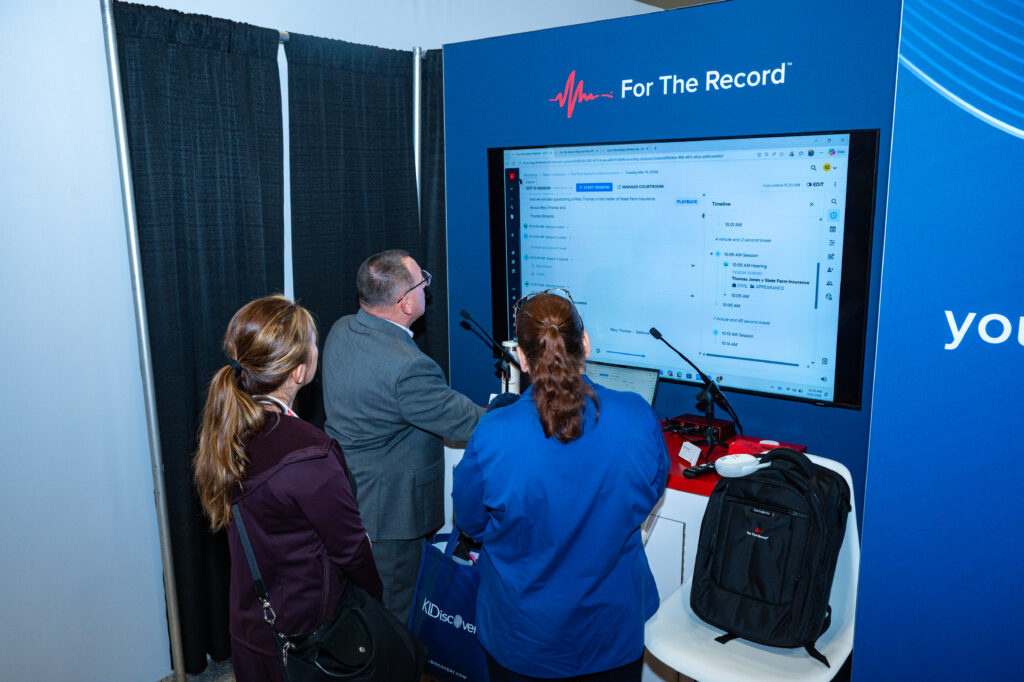
At our booth, a similar message surfaced: in an AI-driven workflow, verification cannot be optional—and it cannot be slow. Legal professionals need to move quickly, with confidence. Every AI-generated output must be traceable back to a reliable source.
Real-time speech-to-text and portable recording aren’t just productivity tools—they enable the secure capture and verification of the sensitive data and insights contained within legal records, allowing teams to trust results while maintaining the pace modern legal work demands.
The conversation is evolving quickly. It’s no longer about capturing the record as a passive artifact. It’s about enabling it as an active, intelligent asset—one that can support search, analysis, and decision-making in real time and beyond.
The firms that move fastest won’t just be those adopting AI—they’ll be the ones investing in the quality and integrity of the data that powers it.
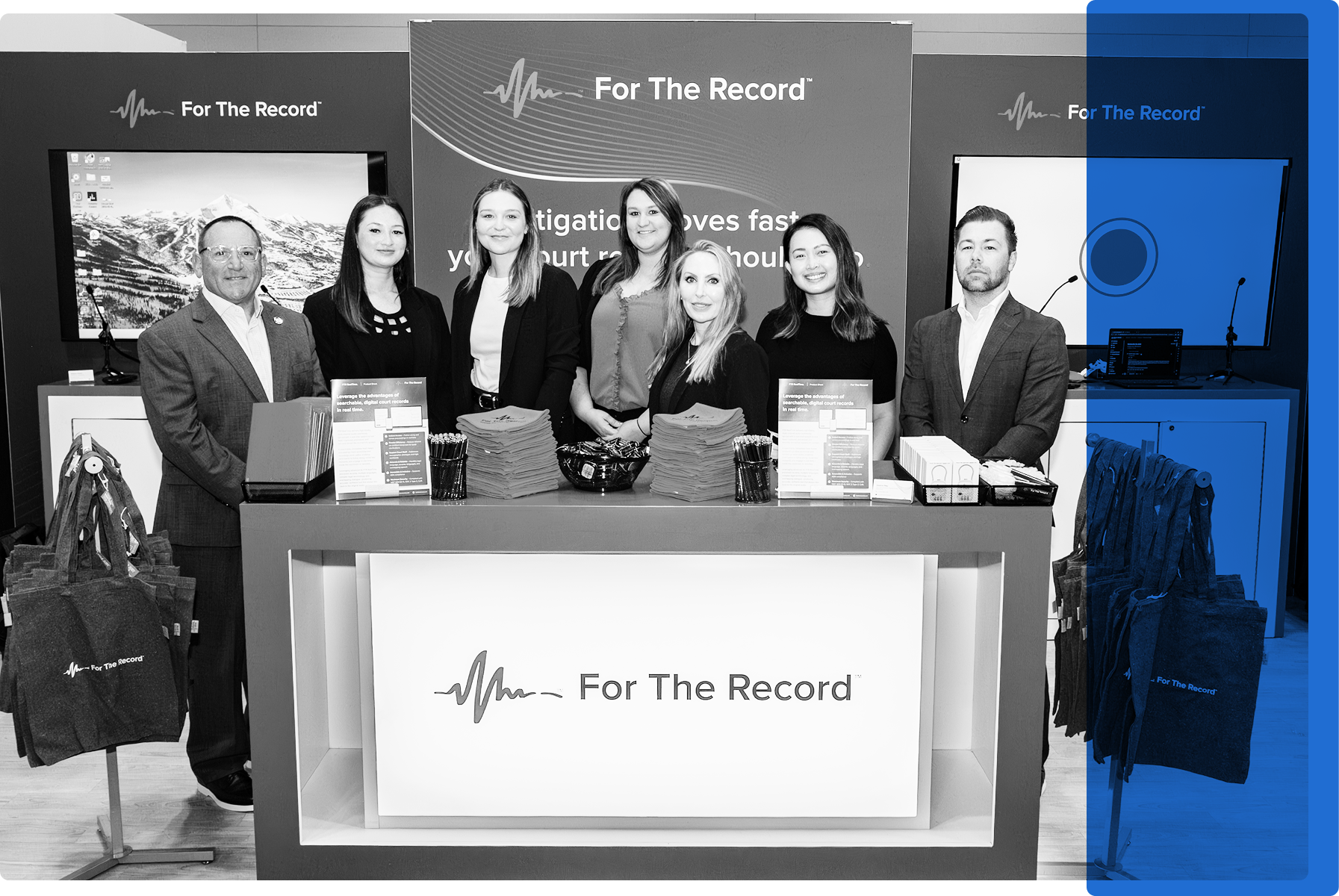
We’re grateful to everyone who shared their perspectives with us at Legalweek. The direction is clear, and the opportunity—and responsibility—for the industry is significant.